Institutions That Survive Morality
Some institutions do not survive because they are right. They survive because they are adaptable.
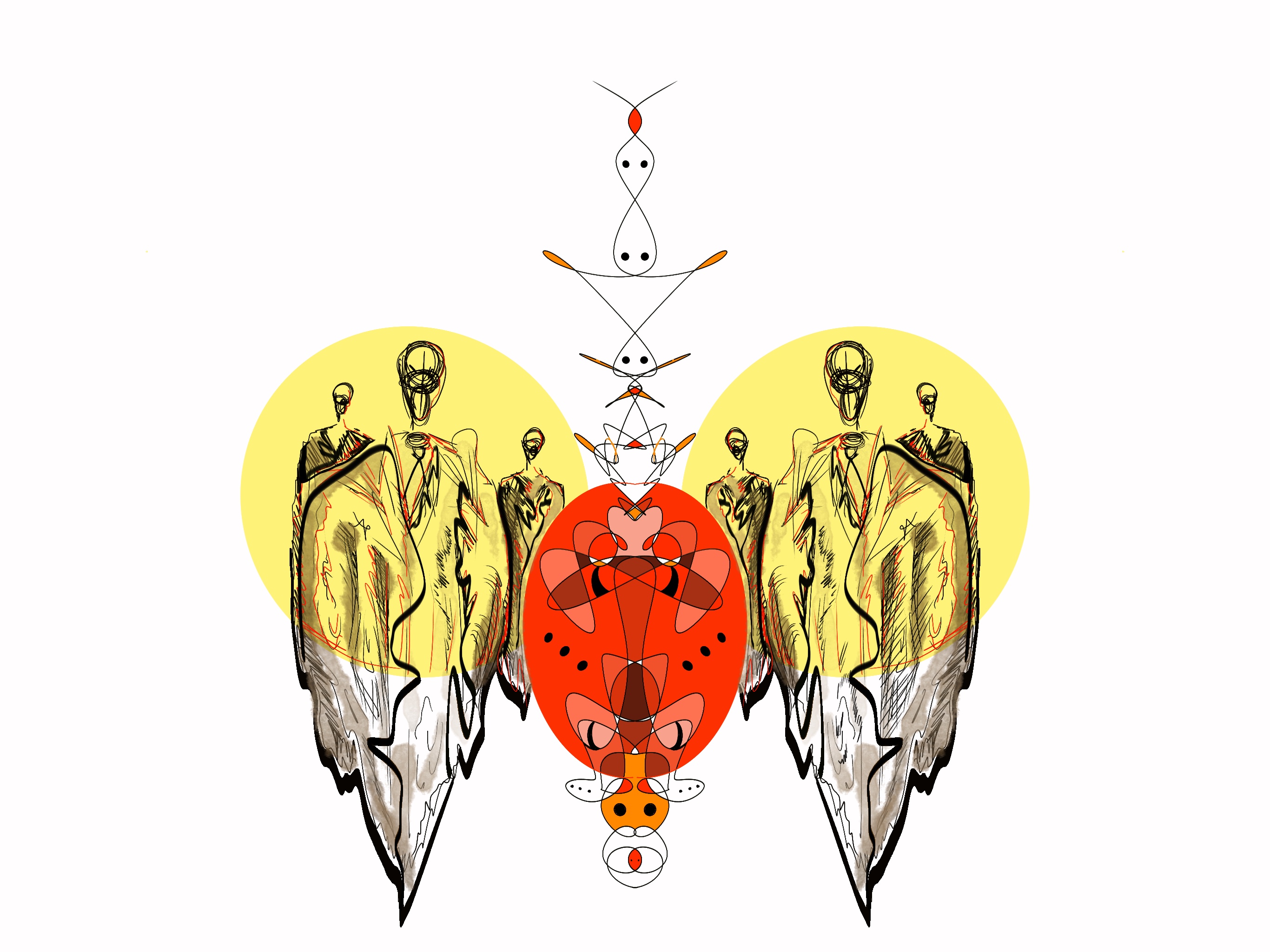
Endurance is not evidence of virtue.
Some institutions do not survive because they are right. They survive because they are adaptable.
They learn how to outlive outrage, how to absorb scandal, how to rename themselves without changing their internal logic. They endure revolutions, wars, court rulings, and cultural shifts not by resisting them, but by aligning just enough to remain indispensable.
This is not evil in the cinematic sense. It is more unsettling than that.
It is continuity without conscience.
The Misunderstanding of Accountability
We tend to imagine accountability as a moment: a trial, a verdict, a punishment. A reckoning that cleanses the past and resets the future.
But large institutions rarely experience accountability as rupture. They experience it as restructuring.
Names change. Subsidiaries dissolve. Boards shuffle. Assets are redistributed.
And the core machinery — the expertise, the capital, the influence — remains intact.
The institution survives morality by stepping around it.
Alignment Without Belief
History shows us that powerful institutions do not need ideology. They need access.
They align with monarchies, democracies, dictatorships, markets, and empires with equal efficiency. Not because they believe in these systems, but because belief is unnecessary when incentives are clear.
When moral frameworks shift, institutions do not repent. They recalibrate.
This is why the most disturbing chapters of history are rarely driven by singular villains. They are enabled by networks of compliance: engineers, chemists, lawyers, accountants, administrators — all performing their roles within a system that rewards function over reflection.
The harm is not an accident. It is an output.
When Survival Becomes the Highest Value
An institution that prioritizes its own survival above all else inevitably inverts its relationship to humanity.
People become:
- labor inputs
- risk factors
- legal liabilities
- data points
- acceptable losses
This transformation does not require malice. It requires scale.
At sufficient scale, moral responsibility becomes diffuse. No single actor feels accountable. Decisions are justified as necessary, inevitable, or unavoidable.
The phrase changes, but the logic remains the same:
- national security
- economic stability
- market confidence
- shareholder value
- systemic risk
Each is a moral anesthetic.
Post-Crisis Amnesia
One of the defining traits of institutions that survive morality is selective memory.
After catastrophe, they acknowledge the past just enough to move forward without changing direction. Apologies are issued. Settlements are paid. Language is softened. Responsibility is abstracted.
What is rarely addressed is structure.
The question is never: Why was this system able to cause harm so efficiently?
It is: How do we restore trust without slowing momentum?
Amnesia is not forgetting. It is remembering without consequence.
The Comfort of Distance
Modern dystopia does not look like brutality. It looks like distance.
Distance between:
- cause and effect
- decision and consequence
- profit and pain
- innovation and responsibility
Institutions thrive in this distance. It allows them to operate without confronting the human reality of their outputs.
When harm becomes statistical, it becomes tolerable. When suffering becomes abstract, it becomes manageable.
This is how morality is survived — not by denying it, but by outpacing it.
The Illusion of Choice
We are often told that institutions persist because we choose them. This is only partially true.
Choice becomes constrained when alternatives are systematically eroded. When participation is mandatory for survival. When opting out feels impractical, irresponsible, or dangerous.
At that point, consent becomes procedural rather than meaningful.
The institution does not need loyalty. It needs dependence.
StopDystopia Is Not Anti-Institution
This is not a call for chaos. It is a call for proportion.
Institutions are tools. They are meant to serve human life, not supersede it.
The moment an institution becomes too large to question, too complex to reform, or too important to interrupt, it ceases to be a tool and becomes an environment.
And environments shape behavior.
The Question That Matters
The most important question is not whether an institution has done harm. All complex systems have.
The question is whether it is capable of moral interruption — the ability to pause, reassess, and change course even when doing so is costly.
Institutions that survive morality do not lack intelligence. They lack brakes.
A Quiet Warning
Dystopia does not arrive when institutions become powerful. It arrives when they become unquestionable.
When survival is mistaken for virtue. When endurance is confused with legitimacy. When continuity replaces conscience.
The future will not be shaped by the institutions that survive morality.
It will be shaped by the people who refuse to let survival outrank responsibility — even when the cost is real.